TrueJob is a job board platform built specifically for Economic Development Organizations, chambers of commerce, and trade associations. It ships with community impact analytics, pre-populated job listings so your board isn't empty on day one, and a built-in ATS, all designed to help local organizations showcase employment opportunities in their regions. Plans start at $425/month (billed annually) plus an $850 one-time implementation fee, making it one of the pricier options in the space. If you're exploring alternatives, here's what to consider.
How to evaluate TrueJob alternatives
Our job board software buyer's guide covers the 9 key decisions for choosing a platform. Here's how those decisions apply when evaluating TrueJob alternatives specifically.
TrueJob occupies an unusual niche. It's not a general-purpose job board platform but a specialized platform for community-driven organizations. That means your evaluation criteria should reflect what actually matters at the EDO and chamber level, not just generic feature checklists.
Employer tools: do you actually need economic impact analytics?
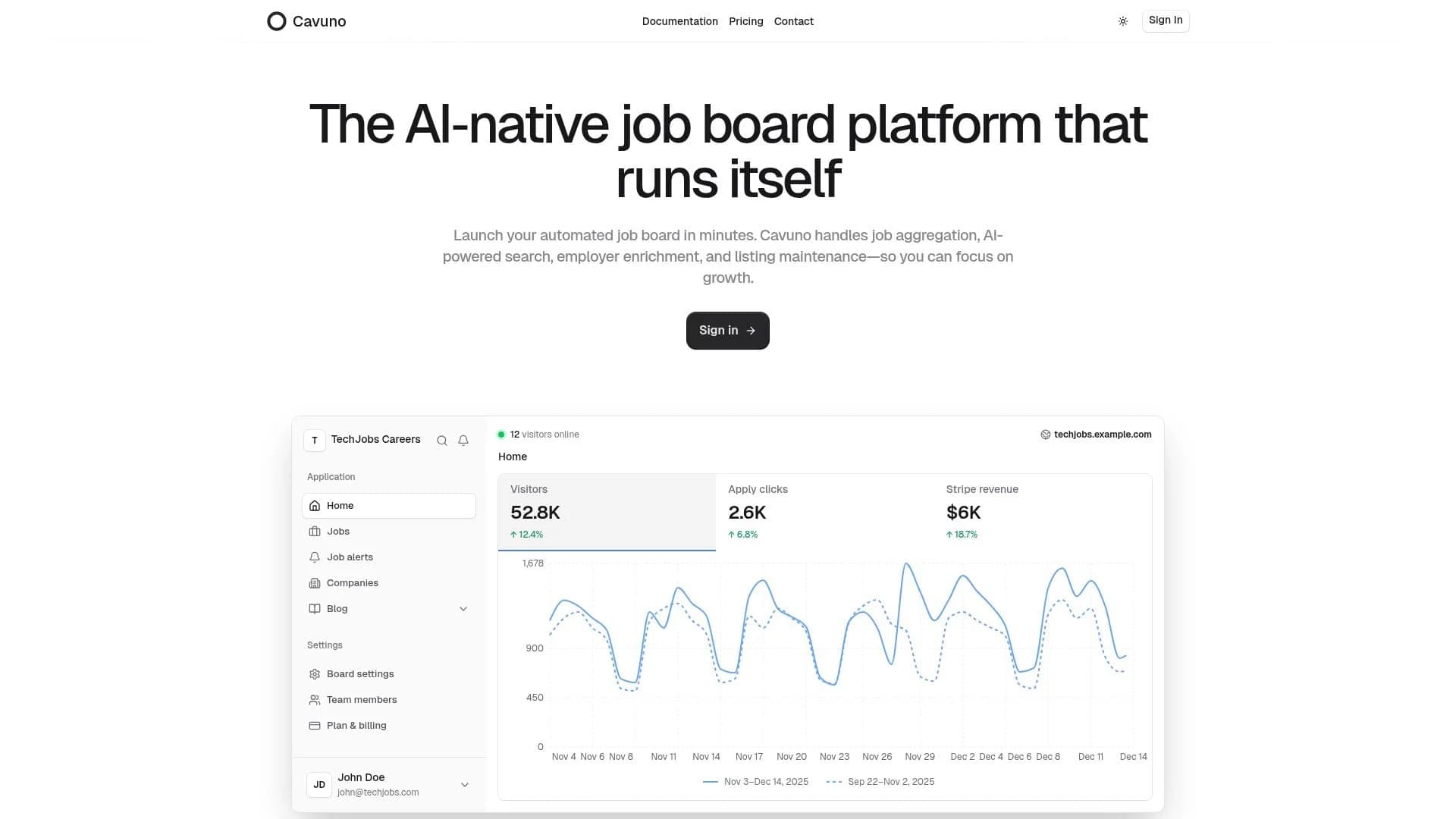
TrueJob's standout feature is its community impact reporting, which tracks metrics like jobs created, economic activity generated, and employer engagement across your region. If your organization reports to a board of directors, city council, or funding body, these analytics can justify your job board's existence in ways that standard platforms can't. But if you're primarily running a job board to generate revenue or serve a niche audience, you're paying a premium for reporting you'll never use. A platform like Cavuno at $29/month gives you job aggregation, SEO tools, and monetization features without the overhead of impact tracking.
Monetization infrastructure: community features vs. revenue capabilities
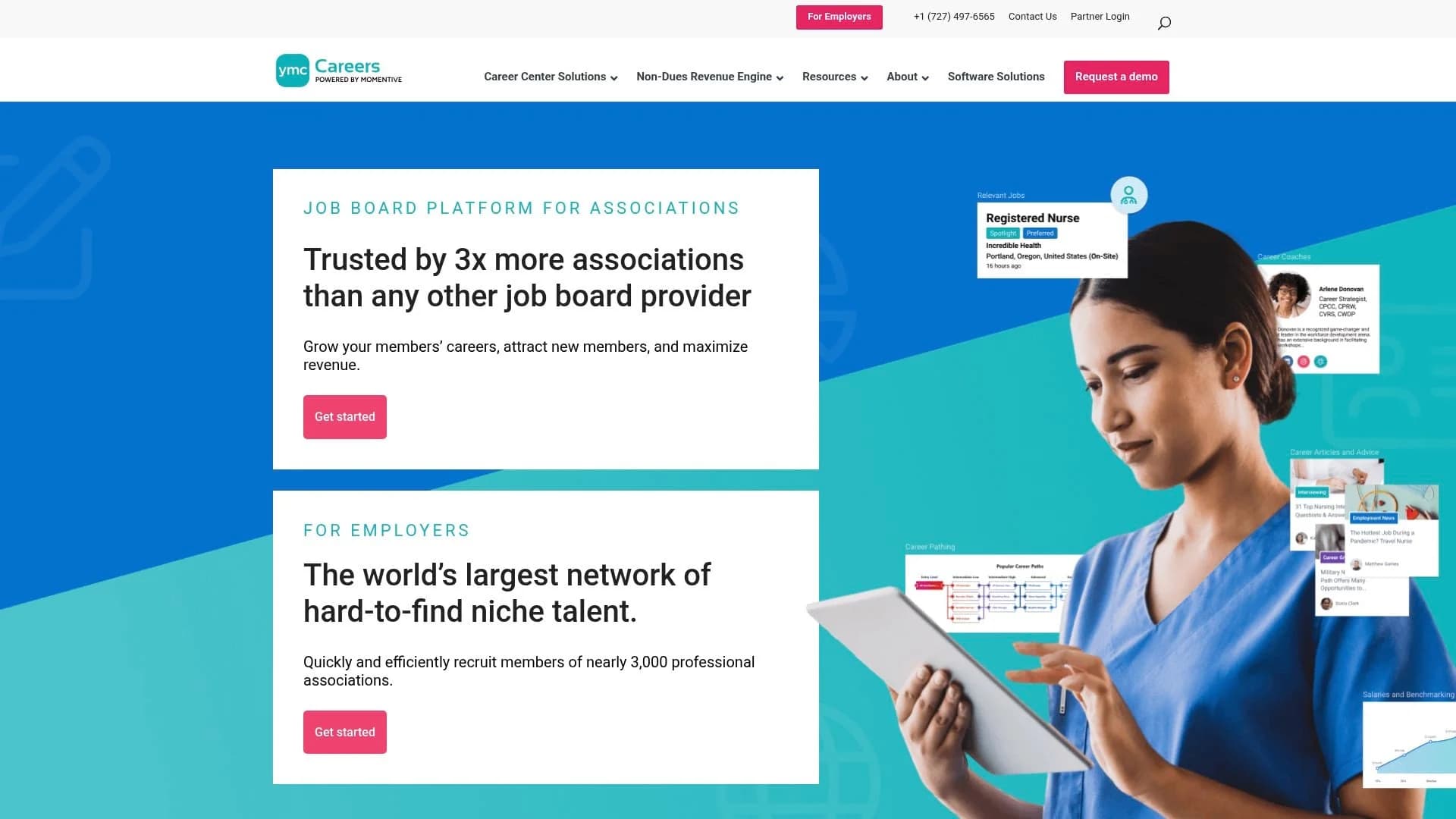
TrueJob's feature set leans heavily toward community engagement: employer directories, regional branding, and workforce development tools. That's great if your job board is a public service. It's less great if you need to generate meaningful revenue from job postings, featured listings, or employer subscriptions. Platforms like Boxwood GO ($49/month, ASAE-endorsed) and YM Careers strike a better balance between association-friendly features and actual monetization tools. Web Scribble's career center suite takes this further with a full revenue-generating ecosystem built for associations.
Aggregation quality: geographic scope and international support
TrueJob is US-only. If your organization operates across borders, has international members, or serves a global industry, this is a hard limitation. General-purpose platforms like Cavuno support international job boards out of the box with multiple currencies, global job aggregation, and no geographic restrictions. Even among association-focused tools, Boxwood GO and YM Careers both handle international use cases more gracefully than TrueJob.
Total cost of ownership at EDO and chamber scale
TrueJob's costs get expensive fast. The $850 implementation fee is a one-time hit, but monthly plans range from $425 to $925 depending on your organization's size. Over a year, that's $5,950 to $11,950 before you've factored in the setup cost. For comparison, Cavuno runs $348/year, and Boxwood GO comes in at $588/year, a savings of $5,600 to $11,600 annually. Unless TrueJob's community analytics and pre-built templates save you 10+ hours per month in staff time, the price gap is hard to justify, especially for smaller chambers operating on tight budgets.
Technical architecture: implementation support and ease of setup
One area where TrueJob excels is implementation. You get dedicated setup support, pre-built templates tailored to EDOs, and pre-populated job listings so your board doesn't launch empty. The one-line code integration makes embedding straightforward. If your team lacks technical resources and needs a turnkey solution, this matters. But if you're comfortable with a drag-and-drop builder or have even basic web skills, platforms like Cavuno and Boxwood GO get you live in under an hour without the $850 setup fee. Cavuno's job aggregation populates your board automatically from day one.
Which TrueJob alternative is right for you?
| Platform | Starting price | Best for | Key strength |
|---|---|---|---|
| Cavuno | $29/month | Small chambers, trade associations | Job aggregation, AI search, modern design |
| Boxwood GO | $49/month | Associations needing credibility | ASAE endorsement, member-focused features |
| YM Careers | Revenue share | Revenue-focused organizations | No upfront costs, scales with traffic |
| Web Scribble | Contact sales | Large associations, publishers | Full career center suite |
| TrueJob | $425/month | Mid-to-large EDOs | Community impact analytics |
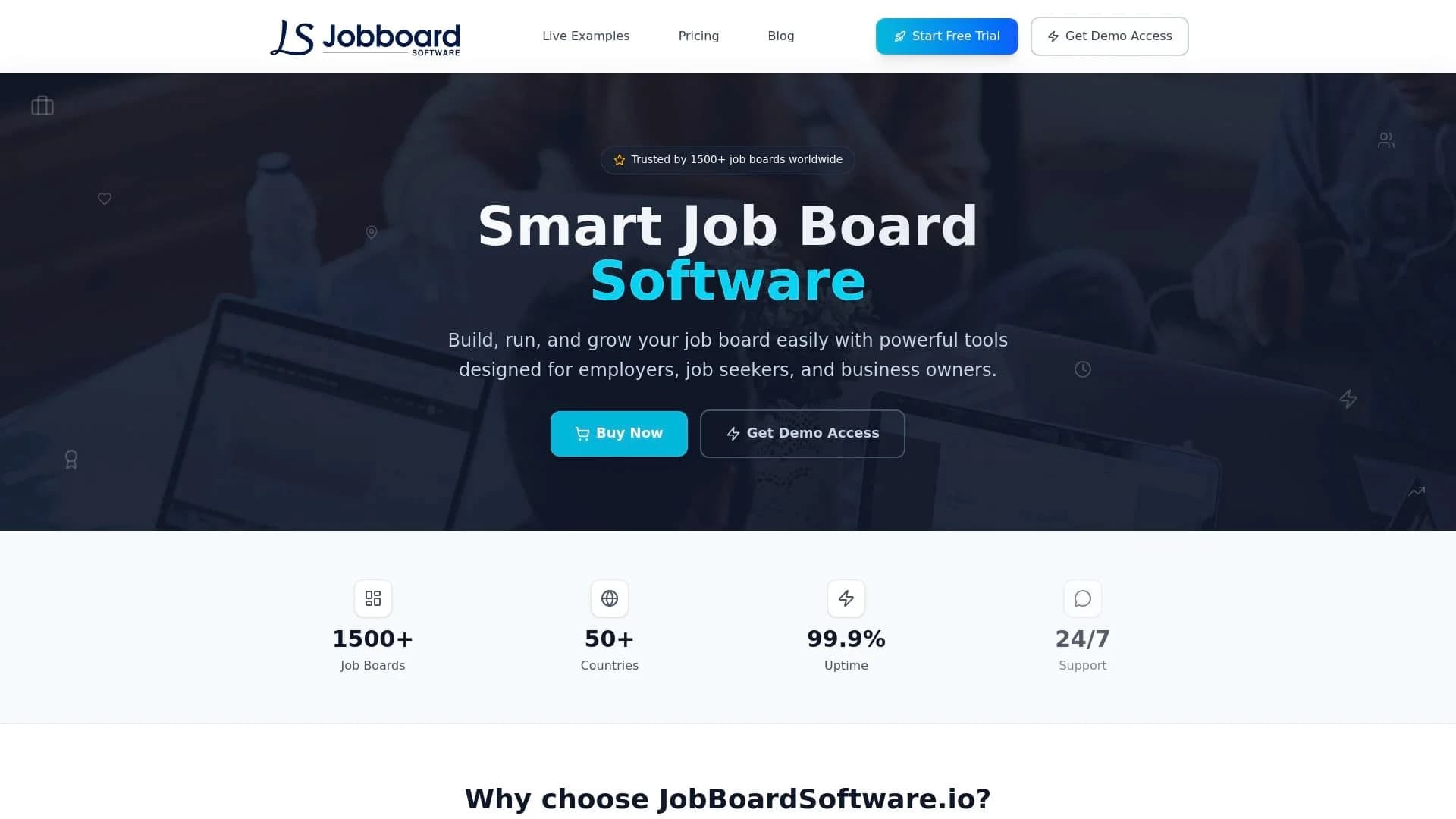
Cavuno is the most cost-effective path for small chambers or trade associations that need a job board up and running with minimal effort and budget. You get job aggregation, AI-powered search, and a modern design that looks professional from day one, all without the overhead.
Boxwood GO at $49/month (ASAE-endorsed) gives associations credibility and a feature set purpose-built for member organizations.
YM Careers works best if your primary goal is revenue generation through employer partnerships and premium listings. Their revenue share model lets you launch without upfront costs and scale your earnings alongside your traffic.
Web Scribble offers the most complete package for large associations and publishers that need a comprehensive career center suite with job boards, resume databases, and employer branding tools.
TrueJob remains the best fit for mid-to-large EDOs that need community impact analytics and workforce development reporting. No alternative replicates its economic impact tracking as effectively.