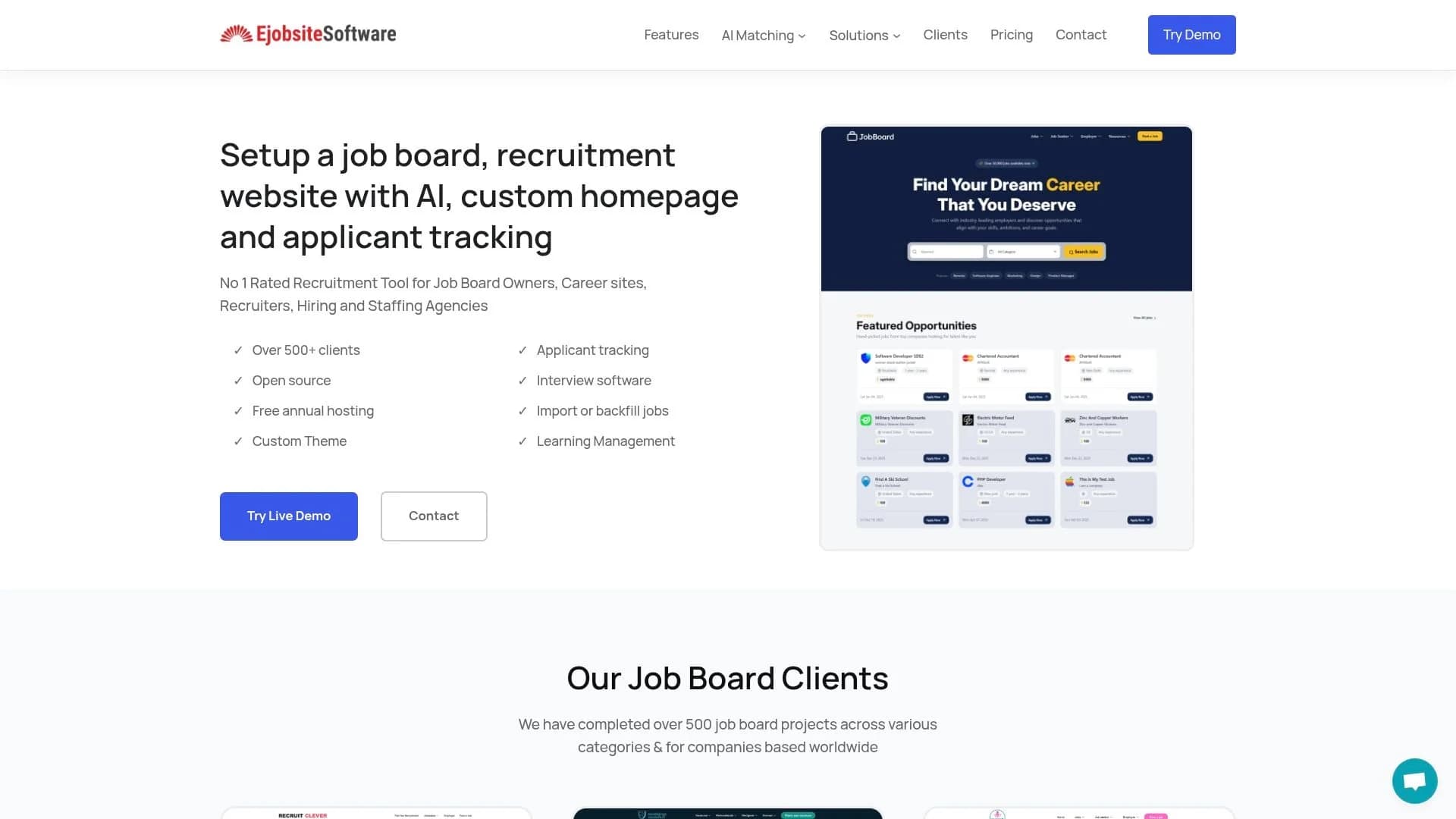
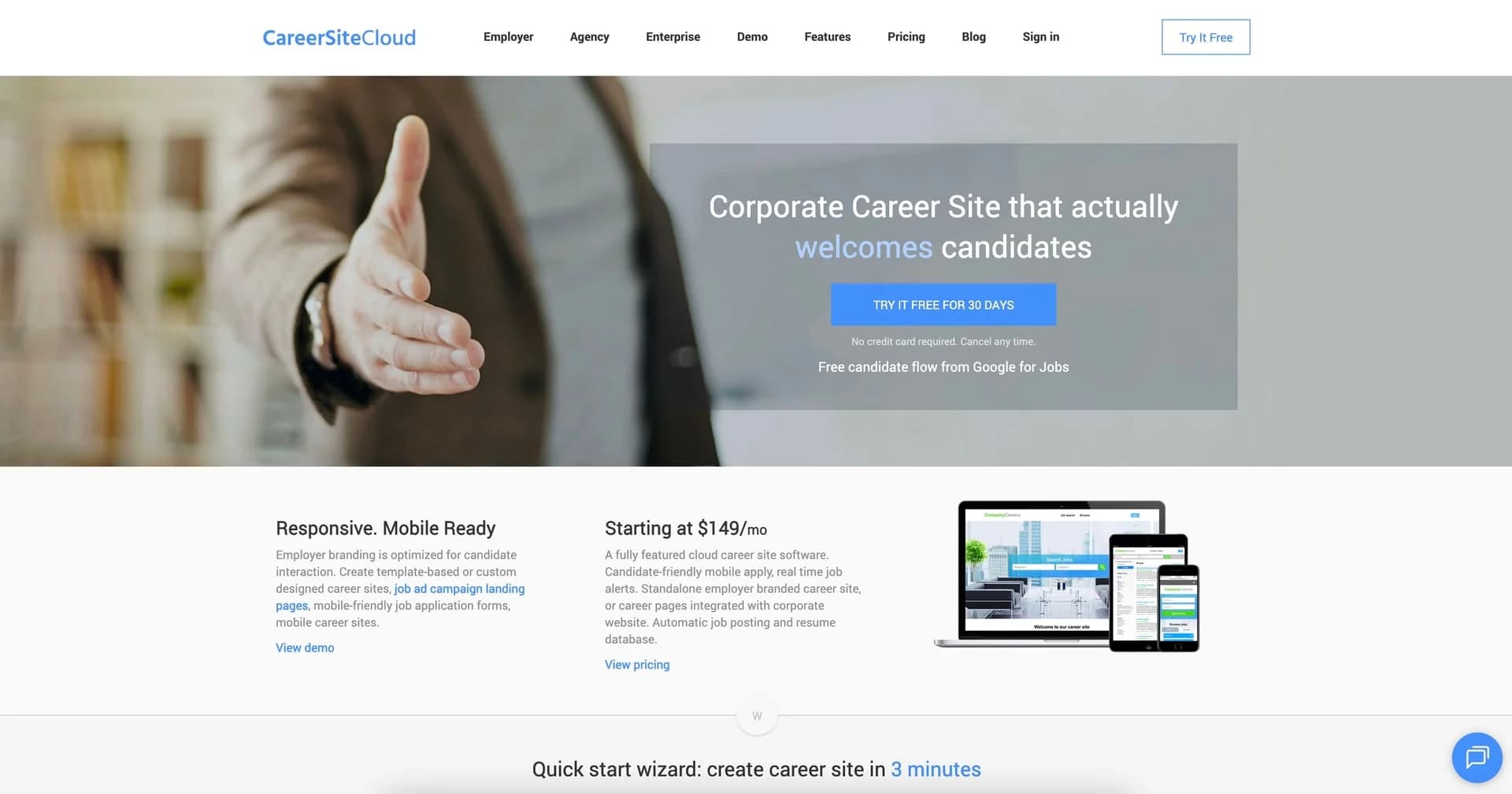
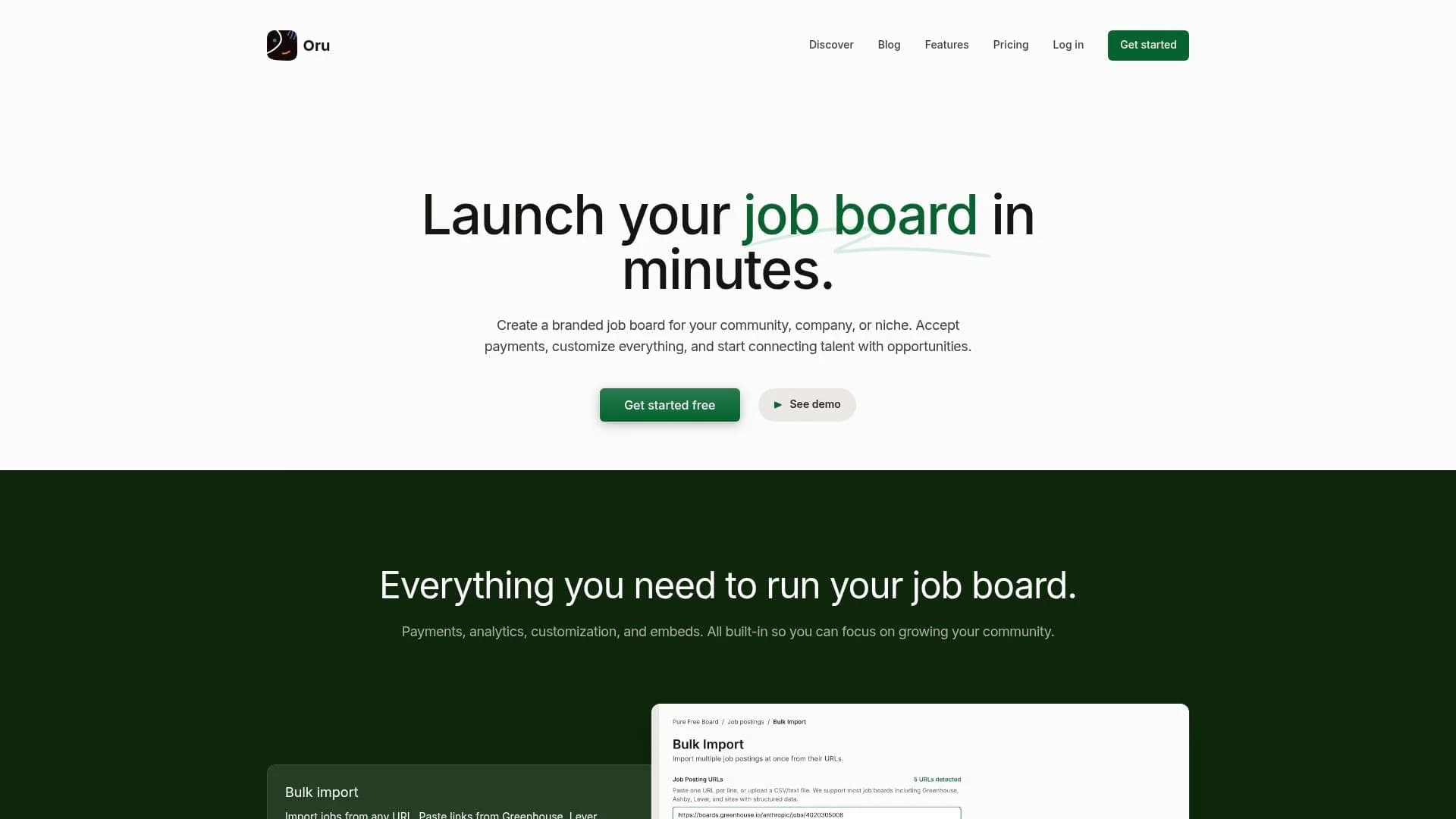
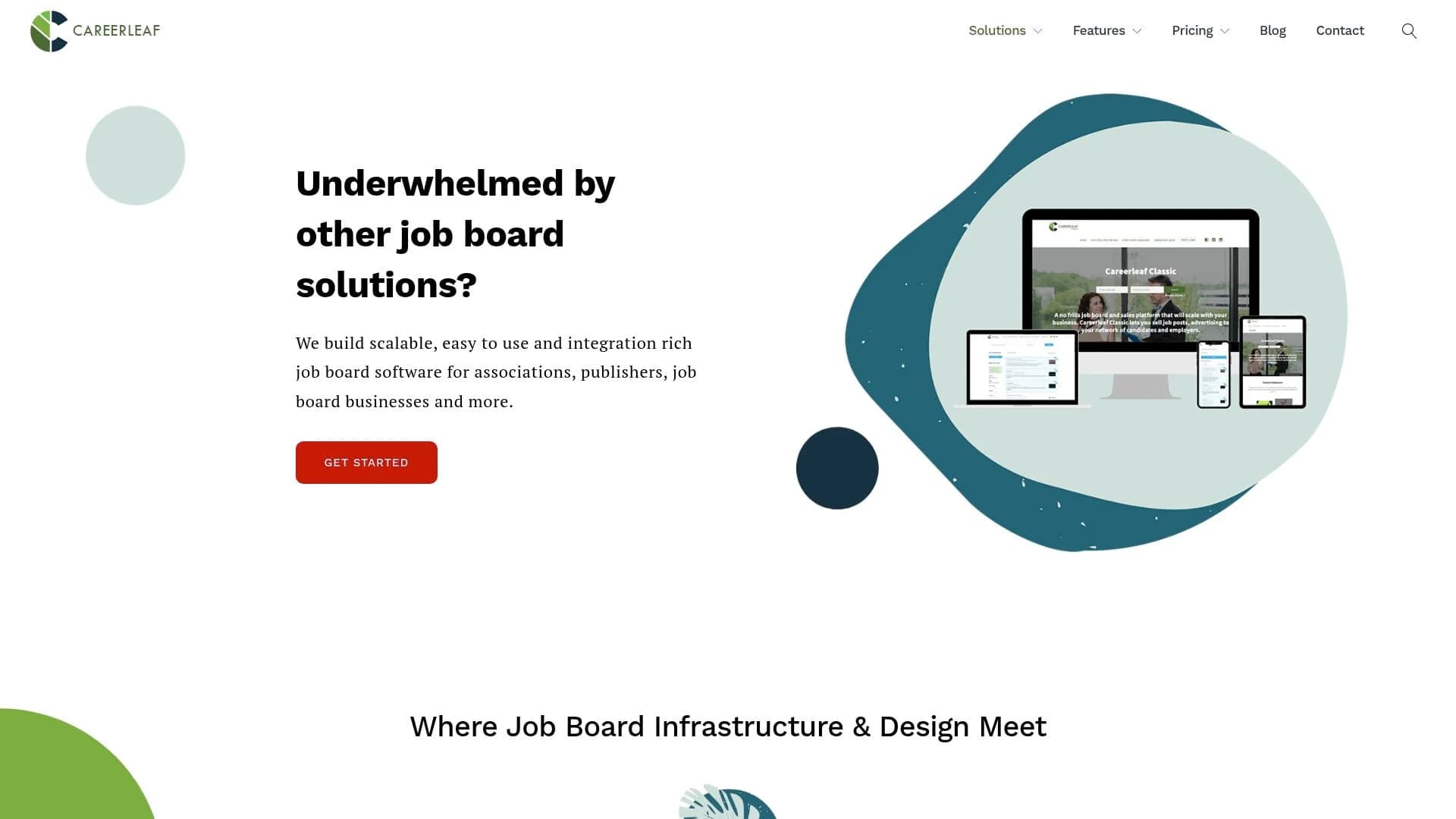
JBoard is a job board platform built for staffing agencies, regional operators, and anyone who needs deep job aggregation out of the box. It earns a 5.0/5 ease-of-use rating on Capterra for good reason: the platform makes it easy to launch a board loaded with aggregated listings from day one. But at $149/month and up, with key features like API access locked behind the Plus plan, it's worth asking whether you're paying for capabilities you actually need.
This guide walks through how to evaluate JBoard against the field and which alternative fits your situation best.
How to evaluate JBoard alternatives
Our job board software buyer's guide covers the 9 key decisions for choosing a platform. Here's how those decisions apply when evaluating JBoard alternatives specifically.
Employer tools: do your employers actually need an ATS?
JBoard's Plus plan includes a built-in applicant tracking system with a registration wall that captures candidate data. That sounds appealing on paper, but most small and mid-sized job boards don't need an ATS. Their employers already use one. Adding a registration wall creates friction for job seekers and can tank your application rates.
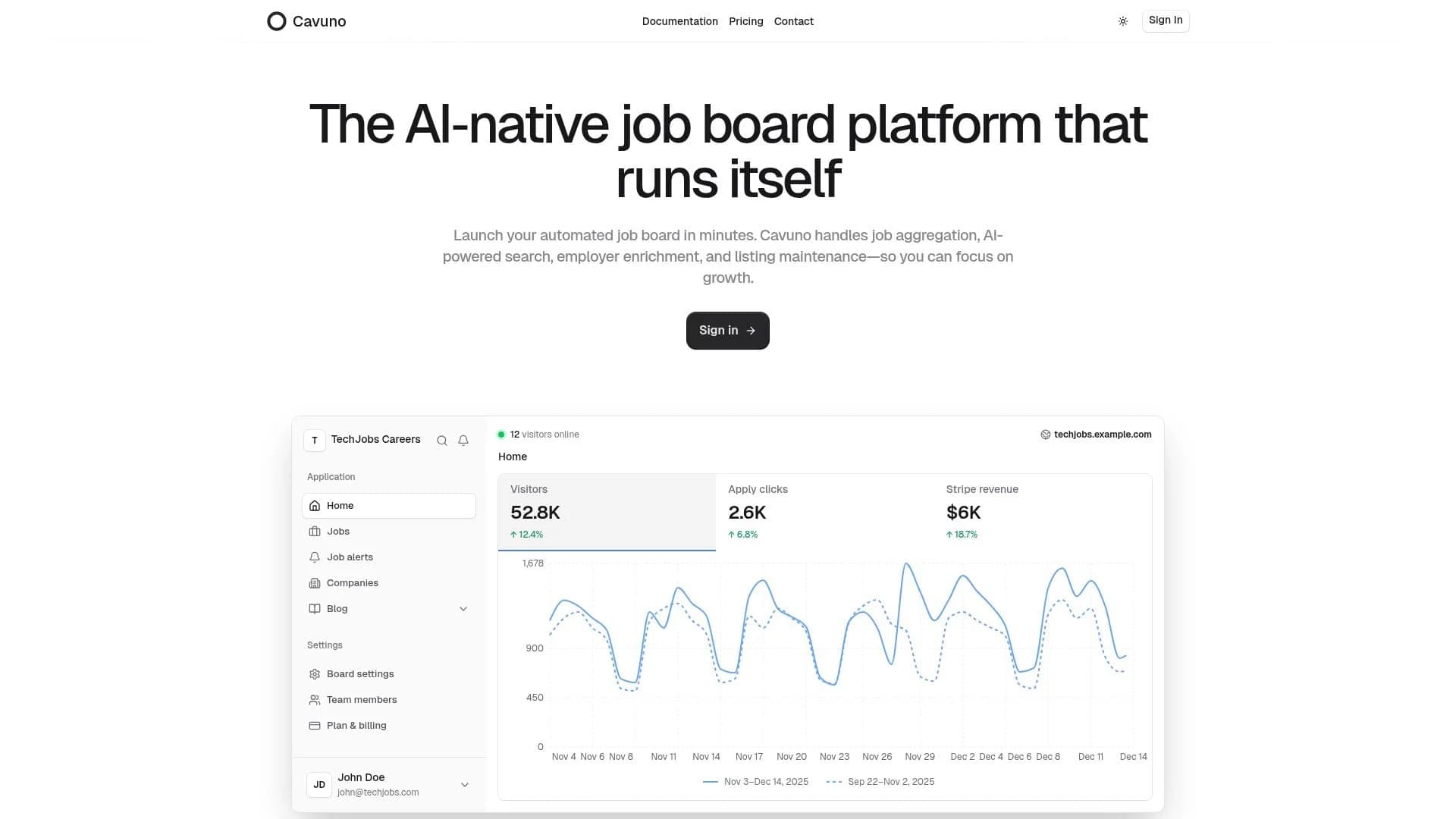
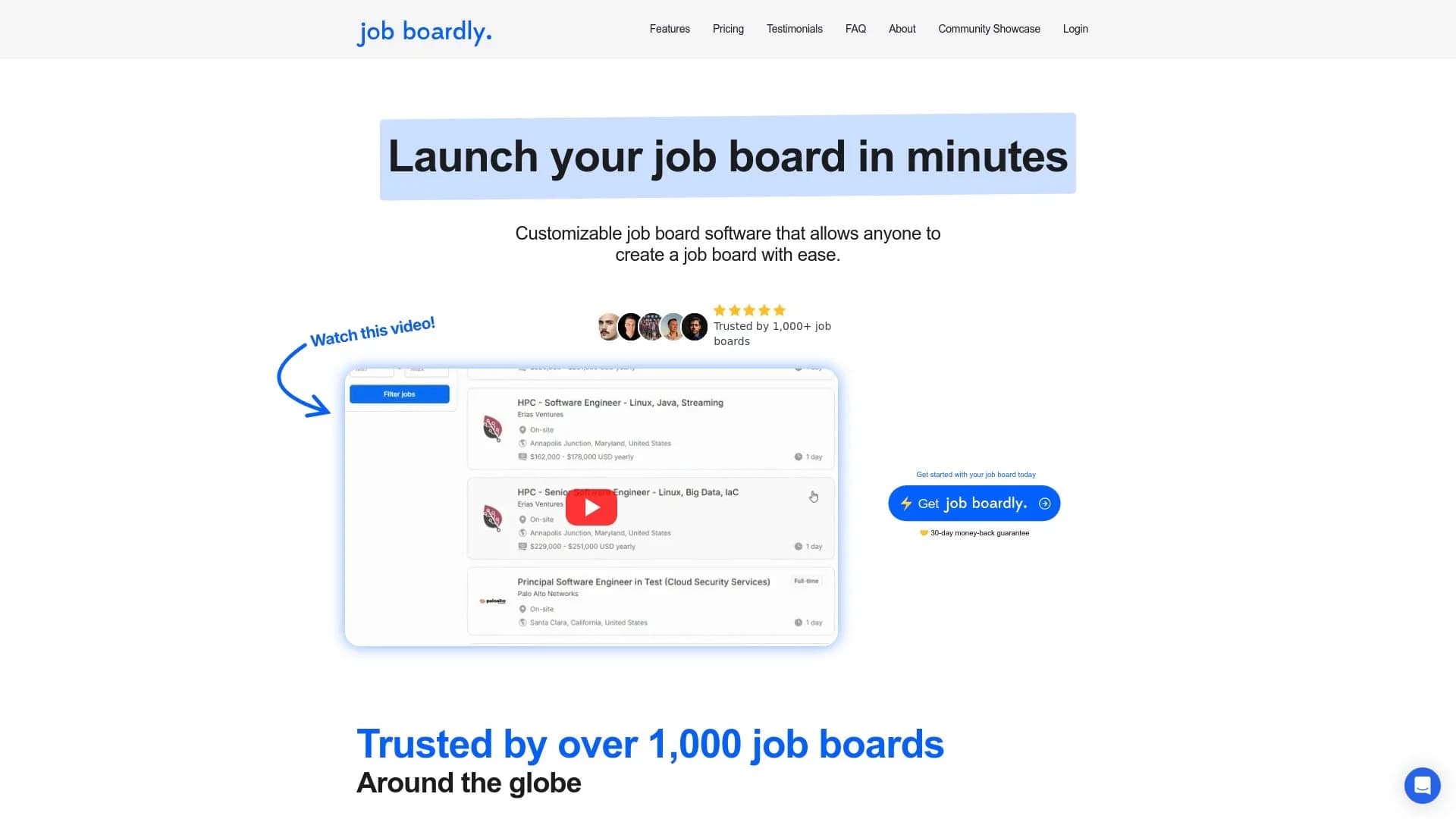
If your revenue model is job postings and sponsorships rather than candidate database access, you're better off skipping the ATS entirely. Platforms like Cavuno ($29–$439/month) and Job Boardly ($40/month) focus on the job board experience without bolting on recruitment tools that duplicate what employers already have.
Aggregation quality vs. quantity
JBoard's headline feature is its job scraping engine, which pulls listings from company career pages and feeds across dozens of countries. The coverage is broad, but aggregation quality matters more than volume. Rule-based scrapers can flood your board with irrelevant or duplicate listings if the filters aren't dialed in.
Cavuno takes a different approach with AI-powered aggregation that uses semantic understanding to match jobs to your board's niche. Instead of scraping everything and filtering after the fact, it pulls jobs that genuinely belong. For operators who care about a curated experience rather than raw listing counts, this distinction matters.
Candidate experience: registration wall trade-offs
JBoard's Plus plan gates job applications behind a registration wall, which builds a candidate database you can monetize. This is a legitimate business model. Staffing agencies and large boards with enough traffic can make it work. But for newer or smaller boards, registration walls drive candidates to apply directly on employer sites instead.
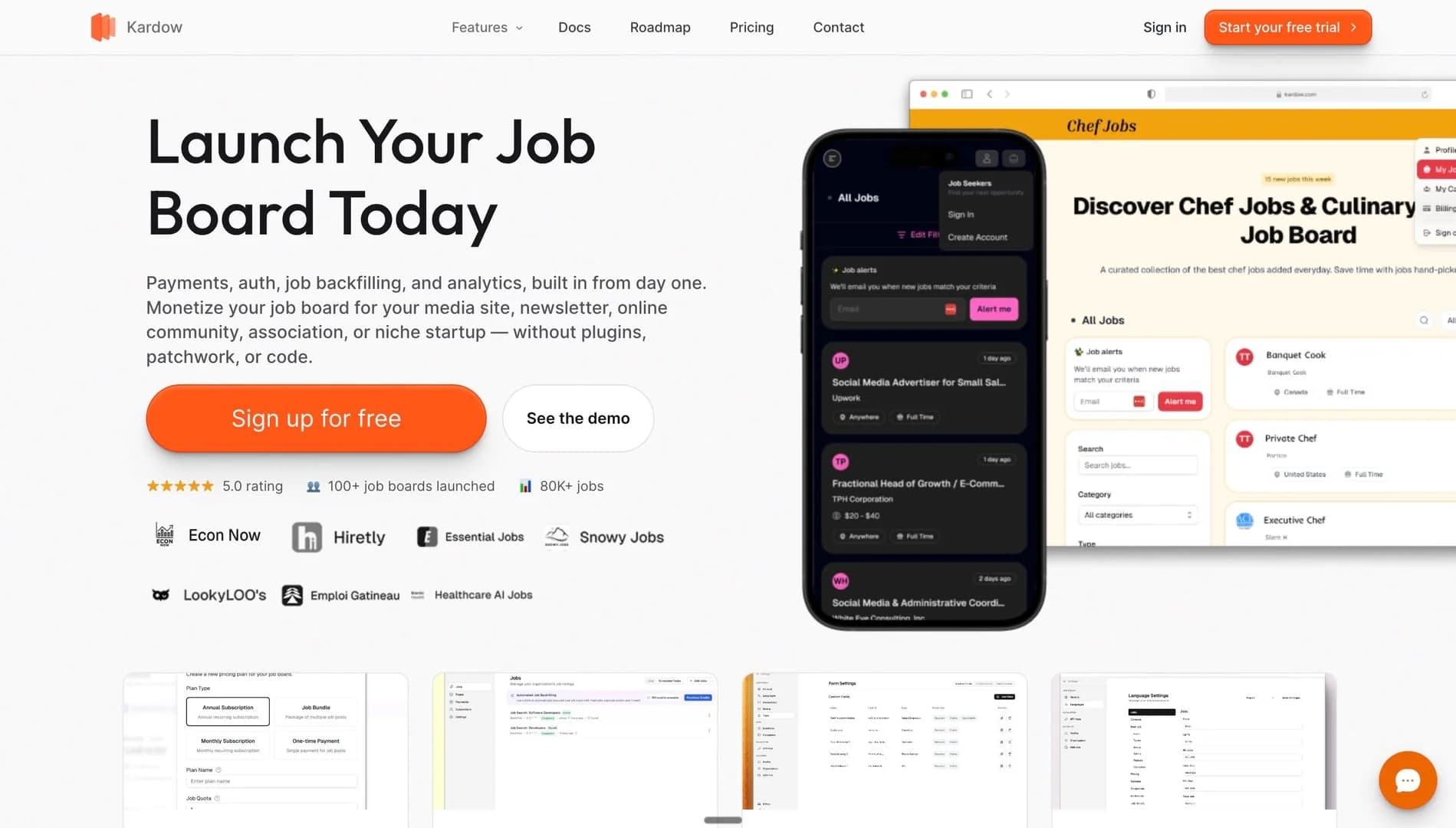
Consider your traffic volume honestly. If you're under 50,000 monthly visitors, forcing registration will likely hurt more than it helps. Platforms without mandatory registration walls (Cavuno, Kardow) let candidates apply with zero friction, which keeps your board sticky and useful.
Total cost of ownership: don't overpay for unused features
JBoard's Standard plan starts at $149/month ($119/month on annual billing), but API access, ATS features, subfolder hosting, and the registration wall all require the Plus plan at a higher price point. That tiering means the platform's most compelling features come at a premium.
Compare this to Cavuno, where semantic search and AI aggregation are available starting at $29/month, or Kardow at $17-$99/month for a simpler but capable setup. SmartJobBoard (contact sales for pricing) sits at the premium end and includes AI matching and a Kanban-style ATS. The key question is whether JBoard's specific feature mix (strong scraping, decent ATS, solid international coverage) aligns with what you'll actually use day to day.
Which JBoard alternative is right for you?
If you want modern AI features at a lower price point, Cavuno is the most direct upgrade. Semantic search and AI-powered aggregation start at $29/month, without the ATS overhead. For operators who need a full-featured ATS and don't mind paying more, SmartJobBoard pairs AI matching with Kanban tracking for enterprise-level boards.
Budget-conscious operators should look at Job Boardly ($40/month for unlimited jobs) or Kardow (from $17/month) for lean, effective boards without feature bloat. If you need a free starting point with room to grow, Artha offers a free tier with ATS available on its Growth plan.
If JBoard's scraping engine is genuinely central to your business and you're using the Plus plan's ATS and registration wall effectively, staying put is the right call. JBoard does what it does well. The question is whether you need all of it.